
James Benson
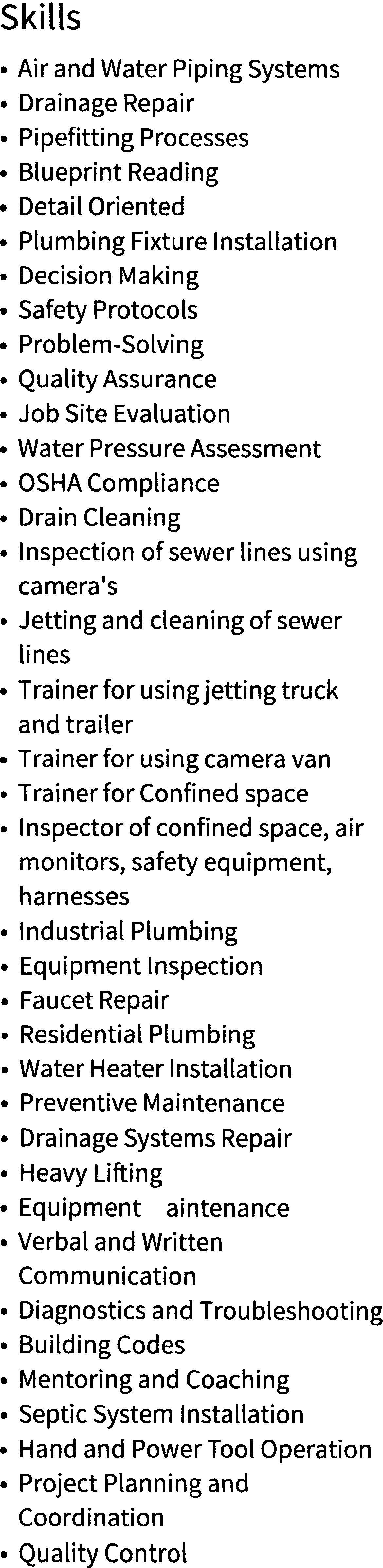
I recently advanced into the Plumber II position, building on my experience as a Journeyman Plumber. I perform installation, maintenance, and repairs on water heaters, drain piping, water supply lines, and underground storm, sanitary, and water systems. I continue expanding my technical capabilities through sewer camera inspections, jetter truck operation, and lift station maintenance. I also take on additional responsibilities in wastewater operations, provide leadership when needed, and help develop field job aids to support consistent work practices and knowledge sharing.
I bring strong plumbing knowledge, awareness of applicable codes and regulations, and a commitment to maintaining proper tools and equipment. I approach complex plumbing systems with safe troubleshooting practices, sound problem-solving skills, and attention to quality workmanship. As I continue growing in my Plumber II role, I look forward to expanding my technical knowledge, strengthening my leadership abilities, and contributing to the department's operational success.
Work History
Journeyman Plumber
11 Years 4 MonthsInstall, maintain, and repair water supply lines, valves, piping systems, and plumbing fixtures throughout airport maintenance facilities.
Diagnose and repair leaks, perform pipe modifications, and troubleshoot complex plumbing and wastewater systems.
Lead wastewater operations, supporting daily work assignments, scheduled maintenance, emergency repairs, and operational priorities.
Perform sewer line inspections using a sewer camera van to identify blockages, damage, and necessary repairs.
Operate jetter trucks and trailers to clean sewer lines, remove obstructions, and restore proper drainage and flow.
Maintain and operate lift stations, monitor system performance, identify mechanical issues, and coordinate necessary repairs.
Inspect and maintain confined space equipment, safety harnesses, and air monitoring devices to ensure compliance with safety requirements.
Fabricate, assemble, install, and repair metal and nonmetal piping, valves, fittings, and plumbing components.
Measure, cut, thread, and bevel piping using specialized tools, cutting torches, saws, and threading machines.
Operate and maintain jetter trucks, trailers, sewer camera vans, and associated equipment to ensure operational readiness.
Safely handle and hoist materials using slings, chains, shackles, hooks, cables, and other rigging equipment.
Mentor and assist newer technicians by providing guidance on plumbing procedures, equipment inspections, wastewater operations, and safe work practices.
Identify and prepare necessary tools, materials, and equipment to complete maintenance and repair projects efficiently.
Recommend improvements to maintenance procedures, equipment reliability, and operational efficiency.
Assist with troubleshooting and implement alternative repair solutions during emergency situations.
Maintain tools, vehicles, and specialized equipment in safe, clean, and reliable working condition.
Follow applicable plumbing codes, regulatory requirements, confined space procedures, and established safety standards while performing assigned duties.
Journeyman Plumber
2 Years 1 MonthLocated and repaired leaks in water supply lines.
Used power tools to create assemblies and sub-assemblies.
Tested plumbing systems to locate leaks, malfunctions and repair needs.
Installed and extended underground storm, sanitation and water piping systems to connect fixtures and plumbing.
Studied blueprints and inspected structures to assess material and equipment needs, pipe installation sequence and installation around possible obstructions.
Assembled and installed metal and nonmetal valves, pipe fittings and pipes.
Followed relevant codes, regulations and safety techniques.
Hoisted loads using slings, chains, shackles, hooks, cables and other rigging equipment.
Identified and located required tools prior to starting each project.
Adhered to safety procedures to reduce risk of injury.
Recommended measures to improve maintenance methods and equipment performance.
Cut openings in walls and floors to accommodate pipe and pipe fittings.
Tested piping systems with water and air pressure to maintain balance and accuracy.
Studied building plans and other materials to determine work aids required and proper installation sequences.
Completed walk-throughs of completed systems to verify code adherence.
Cut and fit pipes to established measurements.
Performed pipe fabrication, installation and fitting according to proper specifications.
Assisted with troubleshooting and used alternative methods in emergency situations.
Installed valves, hangars, supports and flanges inside piping systems.
Maintained tools and equipment to keep supplies in excellent working condition.
Cut and beveled piping using cutting torches, saws and threading machines.
Journeyman Plumber
4 YearsDiagnosed, located, and repaired leaks in water supply lines and complex plumbing systems.
Installed, maintained, and repaired underground storm, sanitary, and domestic water piping systems.
Fabricated, assembled, and installed metal and nonmetal piping, valves, fittings, flanges, hangers, and supports.
Coordinated plumbing projects from start to finish by assigning daily job duties, directing work activities, and inspecting completed tasks for quality and accuracy.
Interpreted blueprints, construction plans, and technical drawings to determine project requirements, material needs, equipment, and installation sequences.
Tested plumbing and piping systems using water and air pressure to identify leaks, verify system integrity, and ensure proper operation.
Performed pipe measuring, cutting, threading, beveling, fabrication, and installation using specialized tools and equipment.
Troubleshot complex plumbing issues and implemented effective repair solutions during routine maintenance and emergency situations.
Operated power tools, cutting torches, saws, threading machines, and specialized plumbing equipment.
Utilized rigging equipment, including slings, chains, shackles, hooks, and cables, to safely lift and position materials.
Conducted system inspections and project walkthroughs to verify compliance with applicable plumbing codes, specifications, and safety regulations.
Identified and prepared necessary tools, materials, and equipment to ensure efficient project execution.
Recommended improvements to maintenance procedures, equipment performance, and operational efficiency.
Maintained tools, equipment, and supplies to ensure safe, reliable, and effective operation.
Followed established safety procedures, industry standards, and regulatory requirements to minimize workplace hazards and maintain a safe working environment.
Journeyman Plumber
6 Years 6 MonthsDiagnosed, located, and repaired leaks in water supply lines and complex plumbing systems.
Led and coordinated plumbing projects from start to finish by delegating daily assignments, supervising staff, and evaluating completed work to ensure quality and productivity.
Supervised team members, monitored work performance, provided guidance, and ensured assigned tasks were completed safely and efficiently.
Installed, maintained, and repaired underground storm, sanitary, and domestic water piping systems.
Fabricated, assembled, and installed metal and nonmetal pipes, valves, fittings, flanges, hangers, and supports.
Interpreted blueprints, construction plans, and technical drawings to determine material requirements, equipment needs, installation sequences, and potential obstructions.
Tested plumbing and piping systems using water and air pressure to identify leaks, diagnose malfunctions, and verify system integrity.
Performed pipe measuring, cutting, threading, beveling, fabrication, and installation according to established specifications and industry standards.
Operated power tools, cutting torches, saws, threading machines, and specialized plumbing equipment.
Troubleshot complex plumbing problems and implemented effective repair solutions during routine maintenance and emergency situations.
Conducted project inspections and final walkthroughs to verify completed systems complied with applicable plumbing codes, regulations, and specifications.
Safely lifted and positioned materials using rigging equipment, including slings, chains, shackles, hooks, and cables.
Identified and organized required tools, materials, and equipment to ensure efficient project execution.
Recommended improvements to maintenance procedures, work methods, and equipment performance to increase operational efficiency.
Maintained tools, equipment, and supplies in safe and reliable working condition.
Followed established safety procedures, industry standards, and regulatory requirements to minimize workplace hazards and maintain a safe working environment.